



How Does a Surgical Tech Program Work?
A definition and a purpose
A surgical tech program is a specialized training pathway designed to prepare students for one of the most fast-paced and critical roles in healthcare—the medical technologist. Think of it like backstage training for operating room professionals. While surgeons take the spotlight, surgical techs make sure everything runs flawlessly behind the scenes. These programs combine theoretical knowledge with hands-on clinical practice, teaching students how to assist during surgery procedures safely and efficiently.
These programs aren’t just to teach skills, but to build precision, discipline, and confidence under pressure. Students learn how to sterilize instruments, prepare operating rooms, and anticipate surgeons’ needs during procedures. It’s a career where even a small mistake can have serious consequences, so training is intense and detail-oriented. It’s structured to simulate real-life surgical environments, so students can transition smoothly into their careers.
Another key goal is to prepare students for certification exams, which are often required by employers. Certification demonstrates competence and professionalism, giving graduates a competitive edge in the job market. In today’s healthcare system, where efficiency and safety are crucial, surgical tech programs are essentia
The role of a surgical tech.
Imagine being in an operating room where every second counts. The surgeon reaches out—without looking—and expects the exact instrument needed. That’s where a surgical technologist steps in. These professionals prepare surgical tools, keep a sterile environment, and provide assistance during operations. They act as the surgeon’s right hand, ensuring procedures run smoothly.
Surgical technologists also play a critical role before and after surgery. Before a procedure, they set up the operating room, sterilize equipment, and prepare patients. During surgery, they pass instruments, monitor supplies, and maintain sterile conditions. Afterward, they clean and restock the room for the next procedure. It’s a role that demands precision, focus, and adaptability.
Recent data shows surgical techs assist with millions of procedures annually, contributing significantly to patient safety and surgical success. This highlights how essential they are in modern healthcare systems. It can be a lot of fun if you enjoy fast-paced environments.
What’s the best reason to become a surgical tech in 2026?
Demand for jobs and growth

Healthcare is evolving rapidly, and surgical procedures keep going up every year. With over 51 million surgeries performed annually in the U.S., the demand for skilled doctors and technologists continues to grow. Hospitals, outpatient centers, and specialty clinics all require trained professionals to support surgical teams.
What makes this career especially attractive is its accessibility. Unlike many healthcare roles that require years of education, surgical tech programs can often be completed in under two years. This means you can enter the workforce quickly while still earning a competitive salary. For many people, it’s a perfect balance between time investment and career reward.
Another factor driving demand is the aging population. As people live longer, the need for procedures increases, creating more job opportunities. Technological advancements, like robotic surgery, are also expanding the scope of this profession, requiring skilled technicians.
Salary Expectations
Let’s talk money—because it matters. The median annual salary for surgical technologists is around $59,100, with experienced professionals earning significantly more. Entry-level positions typically start between $40,000 and $50,000, while experienced techs in specialized fields can exceed $80,000 annually.
Here’s a quick breakdown:
| Experience Level | Average Salary |
|---|---|
| Entry-Level | $40,000 – $48,000 |
| Mid-Career | $52,000 – $60,000 |
| Experienced | $65,000 – $80,000+ |
Certification can boost earnings by 12–18%, making it a worthwhile investment. Specialized roles like cardiovascular or robotic surgery often come with higher pay due to their complexity.
Types of Surgical Tech Programs
Certificate Programs
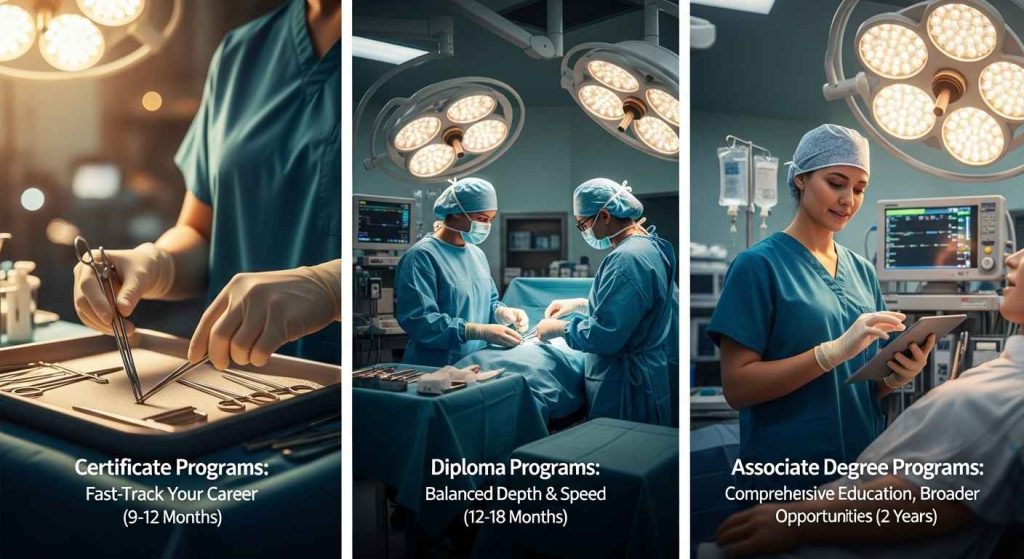
Certificate programs are the fastest way to enter the field. Typically lasting 9 to 12 months, these programs focus on essential skills and knowledge required for entry-level positions. They are ideal for individuals who want to start working quickly without committing to a longer academic path.
These programs are often offered by vocational schools and online platforms. While they are shorter, they still include clinical training to ensure students gain real-world experience. However, some employers may prefer candidates with more advanced education, so it’s important to consider your long-term goals.
Diploma Programs
Diploma programs are slightly more comprehensive than certificate programs, usually lasting 12 to 18 months. They provide a deeper understanding of surgical procedures, anatomy, and patient care. These programs strike a balance between speed and depth, making them a popular choice for many students.
Diploma programs often include more extensive clinical rotations, giving students hands-on experience in different surgical settings. This exposure can be invaluable when entering the job market, as it helps build confidence and practical skills.
Associate Degree Programs
Associate degree programs are the most comprehensive option, typically taking 2 years to complete. They include general education courses along with specialized surgical training. While they require a longer commitment, they often lead to better job opportunities and higher earning potential.
Employers tend to favor candidates with associate degrees because of their broader education and advanced skills. These programs also provide a strong foundation for further career advancement, such as becoming a surgical first assistant or pursuing management roles.
A list of the skills you learned in the program
Core Subjects
Surgical tech programs cover a wide range of subjects designed to prepare students for the operating room. These include anatomy, microbiology, pharmacology, and surgical procedures. Students also learn about sterilization techniques, infection control, and patient safety protocols.
The curriculum is designed to build both knowledge and practical skills. It’s not just about memorizing facts—it’s about applying them in real-life situations. Students must understand how different surgical instruments are used and when to use them. This requires critical thinking and quick decision-making.
Clinical Training
Clinical training is where everything comes together. Students work in real healthcare settings with experienced professionals. Gaining confidence and competence requires hands-on experience.
During clinical rotations, students assist in actual surgeries, learning about different procedures and specialties. These classes help students hone their skills and helps students decide which areas they want to specialize in. It’s like a trial run for their future.
Requirements for admission
What you need to know
A high school diploma or equivalent is usually required for surgical tech programs. Some programs may also require prerequisite courses in biology, chemistry, or anatomy. These foundational subjects help students succeed in more advanced coursework.
In addition to academic requirements, applicants may need to pass entrance exams or background checks. Healthcare roles require a high level of trust and responsibility, so programs ensure candidates meet certain standards.
Skills and traits you’ll need
Being a surgical tech isn’t just about knowledge—it’s about personality and skills. Attention to detail, manual dexterity, and calmness under pressure are essential. You’ll also need strong communication skills to work effectively with surgical teams.
If you’re someone who thrives in stressful environments and enjoys hands-on work, this career could be the perfect fit. It’s challenging, but incredibly rewarding too.
Licensing and certification
CST Certification
The Certified Surgical Technologist (CST) credential is one of the most recognized certifications in the field. While not always mandatory, it significantly improves job prospects and earning potential.
Qualifications
Other certifications, such as TSIA (Tech in Surgery – Certified), are also available. These credentials demonstrate expertise and commitment to the profession, making candidates more attractive to employers.
Duration and cost of the program
Time Commitment
Program duration varies depending on the type of program. Certificate programs can be completed in under a year, while associate degrees take about two years. This flexibility allows students to choose a path that fits their schedule and goals.
Costs of tuition
Costs vary widely, ranging from a few thousand dollars for certificate programs to over $20,000 for associate degrees. Many students can afford these programs with financial aid and scholarships.
Programs online vs. on campus
The pros and cons
Online programs offer flexibility, allowing students to study at their own pace. However, they still need clinic-based clinical training. On-campus programs provide a more structured learning environment and direct interaction with instructors.
Options for hybrid learning
Hybrid programs combine online coursework with hands-on clinical training. Students love this approach because it’s the best of both worlds.
Getting a job after graduation
Environments at work
Surgical technicians work in hospitals, outpatient centers, and specialty clinics. Hospitals typically offer higher salaries, while outpatient centers have more predictable schedules.
Opportunities for advancement
With experience, surgical techs can specialize in cardiology or neurosurgery, which offer higher pay. They might go on to be surgical assistants or operating room managers.
Earning Potential and Salary Breakdown
Pay at entry level
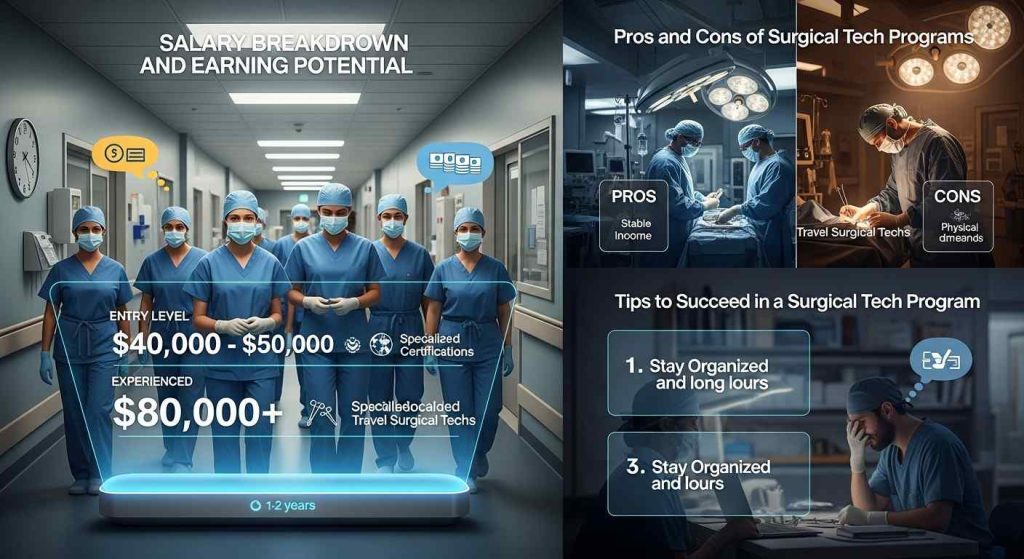
Entry-level surgical techs typically earn between $40,000 and $50,000 annually. This can vary based on location and certification status.
Salaries for experienced people
Experienced professionals can earn over $80,000, especially in specialized fields. Due to higher demand, travel surgical techs often make even more.
Surgical tech programs: pros and cons
Choosing a surgical tech program is a big decision, and like any career path, it comes with its own set of advantages and challenges. Positively, these programs offer a quick path into healthcare. Unlike careers that require four or more years of education, you can start working right away. This makes it an attractive option for individuals who want to earn a stable income without spending years in school.
Another advantage is the hands-on nature of the job. If you’re someone who enjoys practical work rather than sitting behind a desk, this career can be incredibly fulfilling. You’ll be directly involved in life-saving procedures, so your work will be more meaningful. The salary is also competitive, especially considering the relatively short training period. With certification and experience, you can significantly increase your earning potential.
However, there are challenges to the job. Surgical techs often work long hours, including nights, weekends, and holidays. The environment can be stressful, as you’re dealing with high-stakes situations where mistakes are not an option. Physical demands are another factor—you may need to stand for long periods during surgery.
Despite these challenges, many find the rewards outweigh the drawbacks. Make sure what you’re signing up for aligns with your interests and lifestyle before you sign up.
Here’s how to succeed in a surgical tech program
Success in a surgical tech program requires more than just taking classes. It’s about developing the right mindset and habits. One of the most helpful tips is to stay organized. The curriculum can be intense, with a lot of information to absorb in a short time. Keeping track of assignments, deadlines, and study schedules can make a huge difference.
Another key factor is practice. The more you practice your skills, the more confident you’ll become. Take advantage of lab sessions and clinical rotations to get hands-on experience. Learning from experienced professionals is one of the best ways to improve.
Time management is also crucial. Balancing coursework, clinical training, and personal life can be challenging, so plan your time well. Setting realistic goals and breaking them down into smaller steps can help you stay on track.
Finally, stay motivated. Remember why you chose this path and keep your long-term goals in mind. Having a clear purpose can help you get through tough times, whether it’s financial stability, job security, or a passion for healthcare.
Conclusion
Surgical tech programs offer a fast, practical, and rewarding pathway into the healthcare industry. With strong job demand, competitive salaries, and opportunities for advancement, it’s no surprise that more people are choosing this career path in 2026. Whether you opt for a certificate, diploma, or associate degree, the key is to choose a program that aligns with your goals and lifestyle.
The journey may be challenging, but the rewards are significant. You’ll be part of a team that saves lives and improves patient outcomes every day. A surgical tech program could be the perfect start for you if you want a hands-on, high-impact career.
FAQs
1. How long does it take to complete a surgical tech program?
Most programs take between 9 months and 2 years, depending on the type of program you choose.
2. Do I need certification to become a surgical tech?
Certification is not always required, but it significantly improves job prospects and salary potential.
3. Can I study surgical technology online?
Yes, many programs offer online coursework, but clinical training has to be done in person.
4. What’s it like working as a surgical tech?
Yes, it offers strong job demand, competitive pay, and a relatively quick entry into the healthcare field.
5. What’s the average surgical tech salary?
You can earn more with experience and specialization, but the average salary is $59,000 per year.











Hello